


I wrote this article five years ago on a different platform, but every year during Holy Week, it seems to come back to me. Thinking it’s still a word that a lot of Christians need to hear.
March 2021:
I’ve had a word for the Church that has been stirring in me for a couple years now regarding the way that Christians view/celebrate Good Friday. Allow me to preface all this by saying that I, myself, do not think much of the church calendar, but I recognize that much of the Church does. As such, this post is neither an endorsement for Good Friday (or any other holy day/season), nor is it meant to be a criticism of it. However, I humbly offer what I believe is an important correction for many who do celebrate it.
For much of my Christian life, I understood Good Friday to be a time for remembering and mourning Jesus’ death (extra emphasis on mourning). It was characterized by deep, somber reflection on the gruesome way in which Jesus suffered. Every Christian is invited to either put themselves in Jesus’ shoes, to imagine the sheer pain and shame he must have experienced, or to take on the role of his beloved followers as they watched these events unfold in horror, despair, and confusion. As I understood it, the point of Good Friday was basically to feel as terrible as possible, with the hope that this would produce something positive in me, like repentance. Or otherwise, so that I might feel the full effect of Easter.
(Note: It is likely that plenty of Christians see a different purpose for Good Friday than that which I have described above, in which case, this article may not be useful to them. However, as a leader in the church, this was my general experience and understanding of Good Friday for a number of years. So I have to assume that it’ll be relevant to some.)
To examine whether or not this is the right approach to this holiday, I’d like to look at one Scripture, which I believe contains the message that God has put on my heart.
Do Not Weep For Jesus
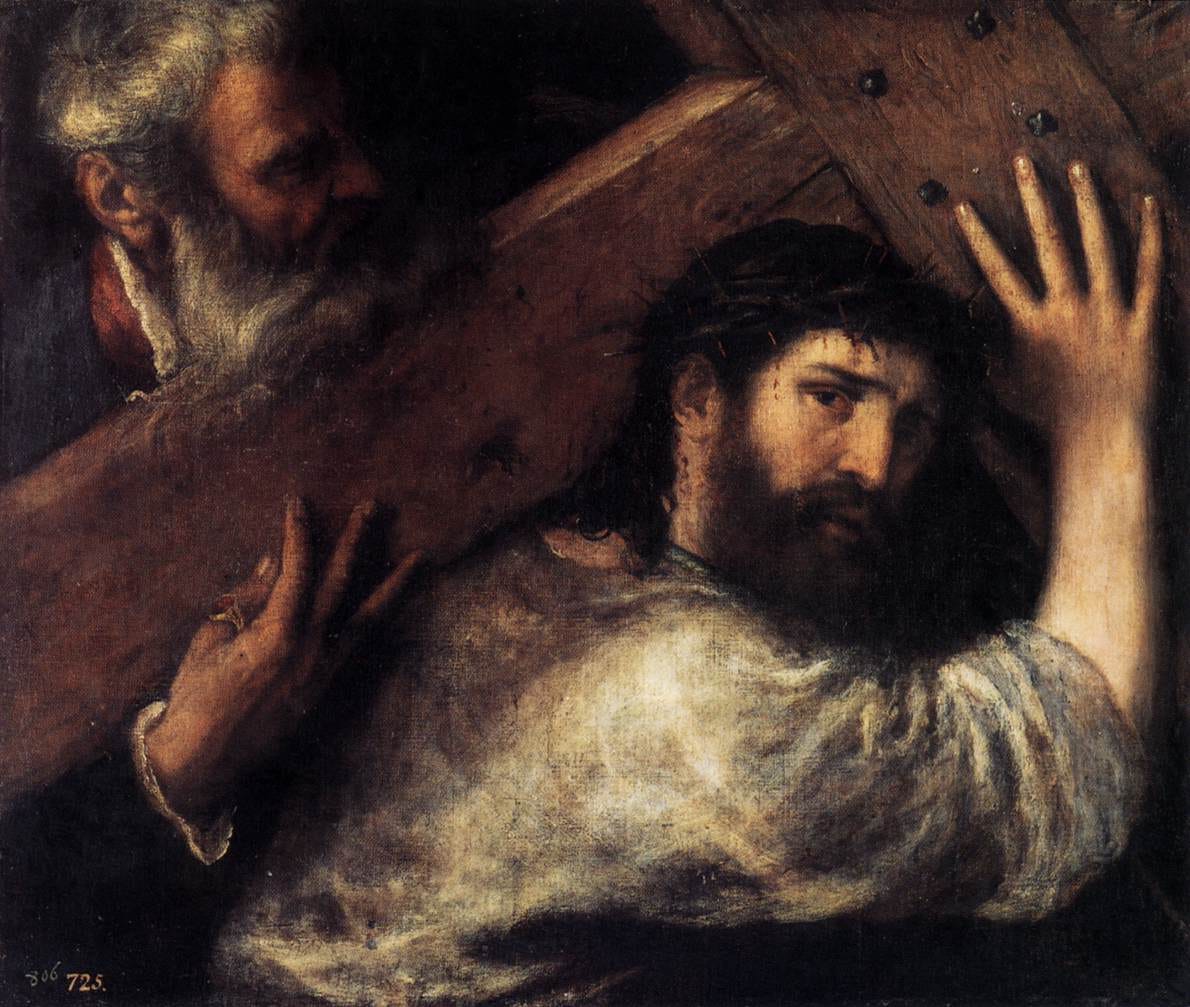
And as they led him away, they seized one Simon of Cyrene, who was coming in from the country, and laid on him the cross, to carry it behind Jesus. And there followed him a great multitude of the people and of women who were mourning and lamenting for him. But turning to them Jesus said, “Daughters of Jerusalem, do not weep for me, but weep for yourselves and for your children. For behold, the days are coming when they will say, ‘Blessed are the barren and the wombs that never bore and the breasts that never nursed!’ (Luke 23:26–29, ESV)
Okay, did you catch it? Do you see how this scripture corrects the “Good Friday” mindset that I addressed above? Here’s my quick breakdown.
Jesus is in the middle of his death sentence. He’s already been beaten to a pulp, mocked, humiliated, and mutilated in a variety of ways. As far as we understand, by this point, he may have been physically unrecognizable. He had already suffered so much, but they knew that the worst was still to come.
So, here are some women who obviously loved him, gazing upon their Master, their Hope, their Leader, their Friend, in utter grief at the events unfolding in front of their eyes. In the midst of such a horrendous affair, it should be easy for us to understand their emotion. But according to Jesus, their feelings about it all are misguided. They shouldn’t be weeping for Jesus, but for themselves.
I propose that if we are going to thoughtfully put ourselves in the shoes of those who witnessed Jesus’ death, then we best listen to the words that Jesus spoke to them: “Do not weep for me, but weep for yourselves and for your children.” This is the word that has been stirring in me for the Church regarding Good Friday, and I honestly believe it applies to any time that we look to the Cross. Do not weep for Jesus. To do so is to entirely miss the point. Instead, weep with Jesus.
Jesus does not want our sympathy.
He wants our eyes opened to the reason that he suffered.
His suffering was never meant to be a guilt trip but an invitation to see the world through his eyes. What on earth could ever compel someone to give their body and shed their blood so selflessly? Nothing but love. Love for those whom he came to save.
As Jesus went through this great trial, I believe that he had no time for self-reflection. The only way for him to willfully endure through such suffering, without calling on the Father to send for his rescue (see Matthew 26:53; 27:39-43), was to be totally, completely, compelled by love, which is selfless by nature.
Therefore, if we were to enter into the heart and mind of Christ on that day, I believe we would find ourselves thinking not of ourselves at all, but of the world ruled by darkness and in such great need of light. We would find our hearts filled with compassion for lost sheep. We would feel an unfathomable burden for freeing people from all forms of captivity and oppression. Though the flesh might be screaming in pain from the nail piercings, the mind of the spirit would be weeping for those who don’t know the Father.
If you think that the nails kept Jesus on the Cross, think again. Love is the reason that he didn’t come down. The only way we have any chance of understanding his suffering is to understand what he felt for this lost and broken world, seeing others (ourselves included) through his eyes of perfect love.
Peace in Christ (who is risen indeed!)
Jake