

The Limits of the Human Intellect to Gain Spiritual Understanding
As evidenced by the story of Thomas Aquinas

Welcome to Part 17 of the weekly release of my book, Unless God Builds It: A Proposal to Radically Rethink the Church.
In the last post, we discussed why faith is the only real application of the gospel, and how equipping the saints with the simple truth of their union with Christ completely decentralizes church ministry. We contrasted the traditional advice given in small groups with a gospel-centric approach.
If you have already read the book and do not wish to receive these weekly emails, simply click ‘Unsubscribe’ at the bottom of this email. It will only unsubscribe you from the Book section, and you will still receive my normal weekly newsletter!
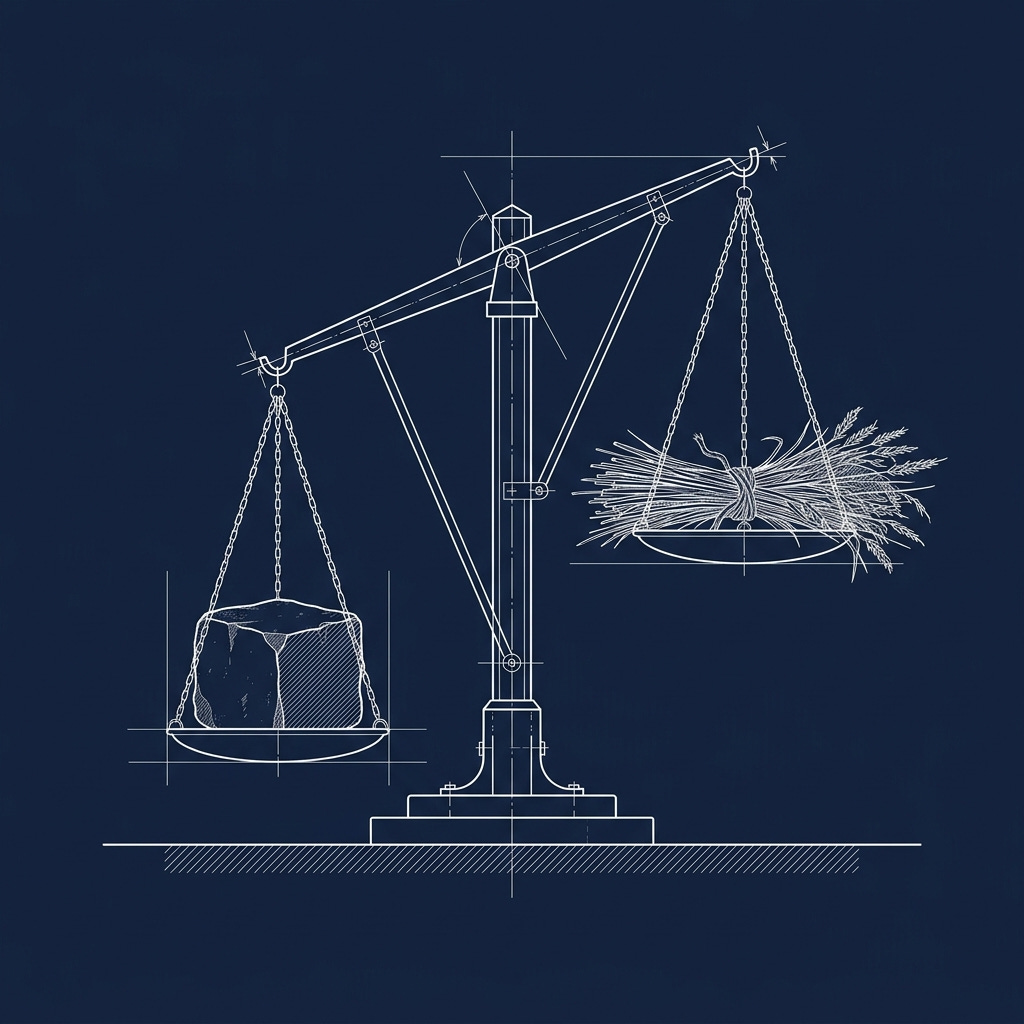
In this post, we examine why the deep mysteries of the gospel can only be understood via Spirit-given revelation, looking at the famous story of Thomas Aquinas and why relying on intellectual scholarship instead of the Holy Spirit has left the Church building on straw.
We Need Revelation
As we seek to understand the depths of the gospel, let us first recognize that God’s plan was a mystery for most of human history (Ephesians 1:9; 3:3, 4, 9; 5:32; 6:19). Not even the angels understood it (Ephesians 3:10; 1 Peter 1:12; 1 Corinthians 2:8). Lest we waste our time coming up with merely human ideas, we must acknowledge that this isn’t an idea someone could ever conceive of on their own (1 Corinthians 2:9). And so, you must accept the fact that unless God reveals it to your heart, you will not truly understand it. No train of logic or human philosophy could ever lead you to it, not even studying the Scriptures. Indeed, it was intentionally hidden by God until the proper time (Ephesians 3:9; cf. Romans 16:25), is actively being hidden from those who consider themselves wise and understanding (Matthew 11:25; 2 Corinthians 4:4; 2 Thessalonians 2:11), and is now being revealed to his saints by the Spirit, beginning with his apostles and prophets (Ephesians 3:3-5; Colossians 1:26-27; 1 Corinthians 2:10).
Practically, this means that we should all begin with a position of humility, which says, “I don’t know…” Most Christians assume they already know the gospel, so they would never think to pray that God teach it to them. But therein lies the issue—the underlying pride that we get it because we can read it on a page, quote it from memory, and make “just enough” sense of it using our own reasoning. But let’s be honest with ourselves. Take any deep spiritual truth and see how it exposes our lack of genuine revelation—like, for example, that we were crucified with Christ (Galatians 2:20). Who really understands what this means? Who truly comprehends the substance of that statement and its implications in the spiritual life? Who, if given the opportunity to write a letter to the Church, would produce these words from their own revelation, had Paul not written them first? I can only now say that, to some degree, I understand this verse, but I had to begin with admitting that I did not and, just as importantly, remain in that state of unknowing until God began revealing it to me.
I urge you, then, pray for God to reveal these mysteries to you and to your church. And even if you start to put some things together intellectually, don’t be satisfied until he has opened the eyes of your heart (Ephesians 1:17-18) and helped you to truly catch a vision of it, so much so that it bears lasting fruit. He hears your prayers, and he is faithful.
If we examine church history, we’ll discover an interesting dynamic: Since the death of the apostles, while spiritual and pastoral leaders have always been present, the figures whose ideas have shaped doctrine and systematic thought have been overwhelmingly highly educated. For two thousand years, Christians—whether realizing it or not—have depended primarily on the thoughts of philosophers, rhetoricians, and scholars for their theological framework. We’ve made a practice of exalting and depending on the intellectual giants among us because we have made an improper assumption—that the intellect is the means to understanding and, therefore, the measure of spiritual authority.
The story of Thomas Aquinas (c. 1225-1274) demonstrates this reality in a nutshell. He was an intellectual giant, to say the least—the kind that comes around maybe once every few hundred years. He spent years meticulously writing the Summa Theologica, a theological treatise intended to explain the whole of creation and faith. And then, shortly before he died, he had an extreme spiritual experience (the details of which are unknown, but it is often thought to be a vision from God).
Upon receiving this revelation, he quit writing, famously declaring: “I can write no more. All that I have written seems to me like straw compared to what I have seen.”
After he died, however, the Catholic Church deemed him a “Doctor of the Church,” and his writings became the foundational system of theology for many centuries to come. Does that not make anyone scratch their head? From my perspective, they might as well have said, “To hell with his revelation; we like his knowledge!” But if they really respected Aquinas, shouldn’t they have given more weight to his final conclusions about his own writings? Had they done so, I believe they would have learned from Aquinas something far more important than anything he wrote in the Summa—that is, due to the limits of human intellect, even the highest form of genius cannot build on top of the foundation with anything but straw (see 1 Corinthians 3:12).
Again, this pertains to the gospel in that the truths which flow out of our union with Christ cannot be conceived or stumbled upon or put together by the intellect; they are spiritually discerned (1 Corinthians 2:14). And the fact that they can only be understood via revelation from the Spirit is precisely the reason that Christians haven’t understood them for nearly two thousand years despite it being right in front of us the whole time. The church hasn’t deeply relied on the Spirit for understanding the truth, so there is much truth that still remains hidden to us.
After reading my first book, one reader commented: “It seems contrary to the evangelical faith I was raised in. I still need to hear reliable theologians who will speak the same language.” This is often the posture that I’ve seen in the Church—an arbitrary trust in “reliable” theologians and a general ineptness at weighing the truth for ourselves. Most people don’t bother with consulting the Scriptures (my book contains over 800 Bible references), praying for the Lord to show them whether it’s true, or inviting others to examine the issue with them. Instead, they cross their fingers and hope that someone in the mainstream will come along to confirm whether it’s true.
It’s mad! We’ve been given the Holy Spirit for this explicit purpose! Brothers and sisters, there is no time for us to depend on the intellectuals. God knows, Christ will return before any single one of us understands the gospel through our natural faculties. Thus, I’ll say it once more: The gospel is a great equalizer in this way. Those who receive revelation from the Spirit and get established in it (enough that it consistently bears fruit in their own lives) prove themselves to have a true authority from God that far exceeds what any man could acquire in his own strength. Those who dare to trust that the Spirit will teach them (not only in isolation but in fellowship with others, too) are those whom God is raising to shepherd his Church, for they alone will be truly equipped for the task. They alone are the stewards of the mysteries of God.
As a point of clarification, you ought to perceive by now that my stance on education and intelligence is no different than my stance on most everything else that I’ve addressed in this book. In and of itself, there is nothing inherently wrong with being naturally smart or pursuing higher education, nor does it necessarily make a person unspiritual. And, of course, the Lord can use it for his purposes. (God knows I’m grateful for the untold number of faithful scholars whose work I’ve depended on for things even so basic as reading my Bible, and much more. To my brothers and sisters in academia, I love you and respect much of your work.) But our reliance on the intellect to develop our theology, learn the ways of God, and ascribe spiritual authority to one another is fundamentally flawed, for only the Spirit can teach and mature a person. All who rely on the intellect to pursue spiritual understanding prove themselves to be immature, not understanding the way of the Spirit.
A common argument I hear is that Paul was both incredibly intelligent and highly educated, and the Lord clearly used these gifts to benefit us. However, while I don’t disagree that Paul may have used his intellectual gifts to articulate truth, he did not use them to understand truth. Despite his academic background and intellectual prowess, there may be no person in history who saw more clearly than Paul how utterly useless these things were as a means to understanding. Hence:
Where is the one who is wise? Where is the scribe? Where is the debater of this age? Has not God made foolish the wisdom of the world? (1 Corinthians 1:20)
And I . . . did not come proclaiming to you the testimony of God with lofty speech or wisdom. (1 Corinthians 2:1)
[N]o one comprehends the thoughts of God except the Spirit of God. Now we have received . . . the Spirit who is from God, that we might understand the things freely given us by God. (1 Corinthians 2:12)
The natural person does not accept the things of the Spirit of God, for they are folly to him, and he is not able to understand them because they are spiritually discerned. (1 Corinthians 2:14)
Let no one deceive himself. If anyone among you thinks that he is wise in this age, let him become a fool that he may become wise. For the wisdom of this world is folly with God. (1 Corinthians 3:18-19)
Various scriptures point to the fact that Paul learned everything he considered valuable via revelation by the Spirit. Therefore, he wrote, “When you read this, you can perceive my insight into the mystery of Christ, which… has now been revealed to his holy apostles and prophets by the Spirit” (Ephesians 3:5; cf. 2 Corinthians 12:1-7; Galatians 2:2).
All this to say, if you think you can gain one ounce of revelation—that is, true spiritual understanding that holds power—by reading books (yes, even this one), studying the Bible, going to seminary, and thinking really, really hard about things, then you are severely mistaken. Even the most intelligent person on earth cannot truly learn anything pertaining to life and godliness if it is not revealed to them by the Spirit of God.
This is why Jesus told the religious leaders of his day—those who knew the Scriptures better than anyone else, by the way—”You search the Scriptures because you think that in them you have eternal life; and it is they that bear witness about me” (John 5:39). Then they crucified him. Hence, he declared, “I thank you, Father, Lord of heaven and earth, that you have hidden these things from the wise and understanding and revealed them to little children” (Matthew 11:25; cf. Luke 10:21). Therefore, only the one who becomes like a child can enter the kingdom of God (Matthew 18:3; Mark 10:15; Luke 18:17).
How, then, shall we come to the full knowledge of the truth? By no other way than the Truth himself (John 14:6, 17). Jesus promised that the Holy Spirit “will teach you all things” (John 14:26) and “guide you into all the truth” (John 16:13). John said: “[Y]ou have no need that anyone should teach you. But as his anointing [i.e., the Spirit] teaches you about everything… abide in him” (1 John 2:27). John’s point (despite being himself a teacher) is that the only real Teacher, the only one capable of actually opening the eyes of your heart, is God.
When I tell you magnificent things, like that you and Christ are one spirit, or that he is your life, or that you are a member of his Body, you may very well agree with me; after all, it is written in Scripture. However, I am not merely quoting Scripture when I tell you these things. Rather, I am speaking of something that I see in my heart (though I see it only in part). What was once just knowledge for me, as it may still be for you, became revelation when the Lord revealed it to me, and becomes so evermore as he continues revealing it in greater detail.
This happens in fellowship with God, in prayer, while sitting at the feet of Jesus, listening to his words, asking for him to help you understand, depending on him entirely to share with you his insight (however it may come), and then waiting and trusting for him to open the eyes of your heart, never being satisfied with mere head-knowledge. This is the only kind of student who becomes like their Teacher. And it’s the only kind of student that God wants you to be.
I ask you, what happened to that brief era when Christ equipped mere fishermen to be the pillars of his church (Galatians 2:9)? On this subject, I’m always reminded of the time when Peter and John stood on trial before the religious leaders after healing the man at the Beautiful Gate:
Now when they saw the boldness of Peter and John, and perceived that they were uneducated, common men, they were astonished. And they recognized that they had been with Jesus. (Acts 4:13)
This ought to be a common occurrence in the Church—that people would be astonished with the spiritual understanding and authority of (at least some) individuals who have no formal training—for it bears witness to the fact that these persons have been with Jesus and learned from the Source. This is what the opposing Jewish rulers recognized about Peter and John in the verse above. But since the death of these apostles, who are the uneducated, common men who have led the Church? They are so few and far between that I cannot help but conclude that Christians largely gave up on learning from Christ!
It never fails: I hear the argument that Peter and John—though “uneducated, common men”—actually would have been more educated than we assume, well-versed in the Jewish texts, rigorously trained in the synagogue growing up, and so forth. But the idea that their level of religious education would have been anything much greater than a child raised in a semi-serious Christian household today—regularly hearing/reading Bible stories, praying before meals, attending church weekly, etc.—is highly questionable. Their skills were in a trade (fishing), not in theology or philosophy. This very fact is what made their apparent spiritual authority all the more remarkable to the Jewish leaders. Their childhood education would have been worth something, for sure, but we’d be mistaken to equate it with going off to seminary or getting a PhD.
I have experienced this dynamic in my own life, as well. It was only after receiving whatever I received from the Spirit in the story above that I noticed people starting to be astonished (and/or offended) when I would teach. I assure you, whatever measure of authority I have been given to teach (and that’s always for you to weigh), I have not obtained by reading many books but by relying on God (with the help of the saints, of course) to answer the deepest questions in my heart and to solve the real-life problems in front of me. In this, I have no intent or reason to boast, but simply to invite you into the same experience of learning from Him.
Amazing, however, is the nearly constant assumption that I learned what I know in the halls of academia or through rigorous personal study. For the sake of transparency, I will tell you that I used to read many books, but I am much more discerning about what I read these days, since I realized how much literature (Christian literature, too) is empty of real wisdom. I also took seventeen courses in seminary (a good Wesleyan seminary, by most accounts) before I dropped out. I dropped out, in large part, because after receiving the revelation I told you about, the value of my education became increasingly suspect.
Over halfway through my time in seminary, I realized that I had never been taught how the finished work of Jesus Christ applies to our daily lives. I had never been taught the power of the gospel, the plain meaning of the Scriptures, what happens to a person when they’re born again, and many of these things that I’ve come to believe are absolutely foundational to the spiritual life and ministry. Do with that what you will, but for me, it exposed that the Church’s well-established avenues of learning and preparing for ministry are fundamentally flawed. The fact that they missed something big for so long is itself proof that they do not understand where real knowledge comes from, despite claiming to hold the keys to it.
But as soon as we realize this, we can move on from it and begin learning. Ultimately, it calls for two things: humility and faith. Humility to admit the possibility that we’ve missed something so huge, that we don’t know nearly as much as we thought we knew, and that we (yes, even the smartest of us) are in utter need of Spirit-given revelation. Faith to once again believe the awesome promises of God (for this life, as well as the next), to believe that he will teach us if we wait on him to do so, and then to believe daily everything he reveals to us. If we do this (and we will because God is doing it), the future for the Bride of Christ is one with much fruitful building. As it stands today, however, we have built a lot on top of a weak foundation, and I implore my brothers and sisters everywhere to begin restoring that foundation, which is the full and powerful gospel of Jesus Christ.
My son, beware of anything beyond [the words of the wise/the collected sayings of the Shepherd]. Of making many many books there is no end, and much study is a weariness of the flesh. The end of the matter; all has been heard. Fear God and keep his commandments, for this is the whole duty of man. (Ecclesiastes 12:12-13)
< Previous Part | Table of Contents | Next Part >
Questions for the Comments:
Why do you think the modern Church tends to assume that theological degrees and academic credentials are the primary measures of spiritual authority, when the early church was led by "uneducated, common men" who simply had been with Jesus?
Have you ever felt that theological study or book-reading became a substitute for sitting at the feet of Jesus and asking the Holy Spirit to open the eyes of your heart?
Want to discuss these topics with other like-minded believers? We explore the theology of the Church, discipleship, and spiritual growth in our monthly Community Calls. It’s a great place to connect—upgrade to a paid subscription today to get access!
Like what you’re reading? You don’t have to wait for the next part. You can read the entire book right now in paperback, ebook, or audiobook format on Amazon. Buy ‘Unless God Builds It’ Here
In Christ,
Jake